
In April 2026, the Spanish government took a historic step: it approved a Royal Decree opening a window for the extraordinary regularization of undocumented immigrants already living in the country. The process has been open since April 16 and will close on June 30, 2026.
For those who meet the requirements, this could be a real and urgent opportunity. However, the criteria are specific, and errors in the process can jeopardize the application.
What is this regularization and why did it happen?The measure responds to a broad social demand: more than 700,000 people signed a Popular Legislative Initiative calling for the regularization of immigrants already living and working in Spain without documentation. Congress accepted the request by a large majority, and the government turned the demand into reality via decree.
The authorization granted is initially valid for one year. At the end of this period, beneficiaries must transition into the ordinary categories provided for in the Reglamento de Extranjería (Immigration Regulations), moving toward full and progressive integration into the system.
Who can apply?There are two profiles covered by this regularization:
Profile 1 — Foreigners in an irregular situation
- Must have been in Spain before January 1, 2026.
- Must have remained in the country uninterruptedly for at least 5 months prior to the application.
- Must have no criminal record and not pose a threat to public order or security.
- Must not have an entry ban for Spain or be listed as inadmissible in countries with agreements with the Spanish State.
Profile 2 — Applicants for international protection
- Must have submitted an application for international protection before January 1, 2026.
- Must be in Spain at the time of the application.
- Must have no criminal record and not pose a threat to public order.
Who CANNOT participate?
- Persons with a current residence permit or one that is in the process of being renewed.
- Students, holders of a job-seeking authorization (búsqueda de empleo), or non-lucrative residence permits.
- Stateless persons (who have their own specific regime).
- Ukrainians with a current temporary protection authorization.
What do you receive?Those approved will receive a residence and work permit valid for 1 year, applicable to any sector and anywhere within Spanish territory. Important: this authorization does not grant the right to work in other European Union countries, only in Spain.
How is the application made?The process can be initiated in two ways: in person, by prior appointment at service centers, or electronically via the MERCURIO platform, available 24 hours a day throughout the application period.
The deadline to submit the application is June 30, 2026. No extension is expected.
A special note on "uninterrupted stay"The 5-month uninterrupted requirement is strict: any departure from Spanish territory during this period compromises fulfillment of the criterion. This differs from the concept of "continuous residence," which allows for short, justified absences. For extraordinary regularization, the presence must be literal and documentable.
What to do now?If you believe you qualify for this regularization, the first step is to carefully evaluate your situation — especially your history of physical presence in the territory and the documentation available to prove the 5-month stay. Any mistake in the application or documentation can result in the case being dismissed.
Seeking specialized advice from the beginning is not a luxury: it is the difference between a well-constructed process and one that misses the deadline due to a missing document.

More from our blog
Explore articles on immigration law and relocation strategy


Anyone who follows the European immigration landscape knows that France has never been exactly an open-door country. However, in recent months, the changes have gone beyond the usual — and they directly impact those planning to reside, work, or apply for French citizenship.
Since January 2026, France has begun requiring formal proof of both civic knowledge and French language proficiency for non-European nationals applying for residence permits or naturalization. In practice, simply attending a language course is no longer sufficient: applicants must now present an officially recognized certificate — level A2 for multi-year residence permits, B1 for permanent residence, and B2 for naturalization.
But language is only part of the story. A circular published in May 2025 reinforced that naturalization is not an automatic right, even for those who meet all legal requirements. In practice, what the government evaluates is the applicant’s level of integration into French society — which goes far beyond length of residence or employment status.
Economic criteria have also been tightened: for citizenship applications outside of marriage, applicants are now required to demonstrate stable employment and a minimum income equivalent to the French minimum wage. Individuals with a history of irregular status or failure to comply with removal orders are automatically excluded from the process.
And the changes do not stop there. Access to social benefits now requires five years of continuous residence, the waiting period for family reunification has increased from 18 to 24 months, and children of foreign nationals born in France no longer automatically acquire citizenship upon reaching adulthood.
The landscape is more restrictive, but not insurmountable. Those who prepare in advance and understand the rules of the game are far more likely to build a strong and successful application. That is exactly why we exist.
France 2026: What Has Changed for Those Who Want to Live or Become a French Citizen
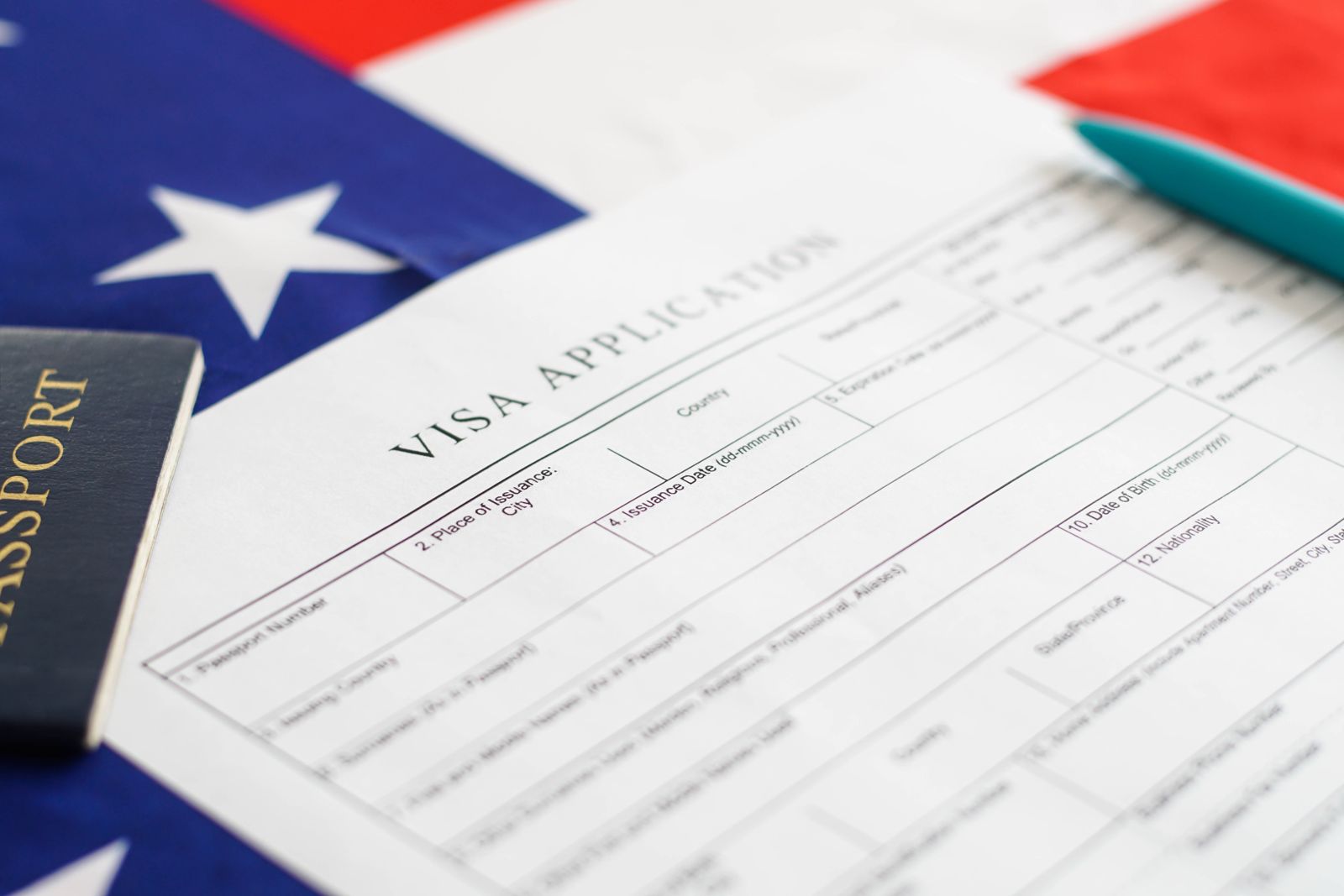
Studying in the United States has always required planning. However, in recent months, the process has become visibly more complex — and ignoring these changes can jeopardize not only your visa but your entire academic trajectory.
One of the updates with the most impact on students is social media screening. All F-1 and J-1 visa applicants are now subject to additional vetting of their online presence as part of the adjudication process. What you post, share, and comment on can indeed be analyzed before a decision is reached.
There is also a proposal under discussion that is particularly concerning for those considering graduate studies: the DHS (Department of Homeland Security) has proposed limiting the period of stay for students to four years. This directly conflicts with the average of six years required for a PhD in the U.S. Anyone exceeding this timeframe would be required to apply for a formal extension of stay.
Another critical point is the proposed elimination of "Duration of Status" (D/S). The proposal to terminate this mechanism for F and J visas was formally published in the Federal Register in August 2025. Currently, this system allows a student to remain in the U.S. for as long as they maintain their status to complete their studies without a fixed expiration date on their I-94 — a flexibility that may soon cease to exist.
For students from certain countries, the scenario is even more delicate. Those already in the U.S. with a valid F-1 visa are not affected by recent travel bans or restrictions. However, students from restricted countries who did not have a visa issued by January 1, 2026, are likely ineligible to obtain one at this time.
Despite all of this, the F-1 program remains active, with over one million international students in American institutions, and undergraduate enrollment grew by 2% in the fall of 2025. The U.S. remains a viable destination — but it demands more diligence than before.
If you are planning to study there, the time to understand these changes is now, before taking any steps in the application process.
Student Visas for the USA: What is Changing and Why You Need to Prepare Now

In April 2026, the Spanish government took a historic step: it approved a Royal Decree opening a window for the extraordinary regularization of undocumented immigrants already living in the country. The process has been open since April 16 and will close on June 30, 2026.
For those who meet the requirements, this could be a real and urgent opportunity. However, the criteria are specific, and errors in the process can jeopardize the application.
What is this regularization and why did it happen?The measure responds to a broad social demand: more than 700,000 people signed a Popular Legislative Initiative calling for the regularization of immigrants already living and working in Spain without documentation. Congress accepted the request by a large majority, and the government turned the demand into reality via decree.
The authorization granted is initially valid for one year. At the end of this period, beneficiaries must transition into the ordinary categories provided for in the Reglamento de Extranjería (Immigration Regulations), moving toward full and progressive integration into the system.
Who can apply?There are two profiles covered by this regularization:
Profile 1 — Foreigners in an irregular situation
- Must have been in Spain before January 1, 2026.
- Must have remained in the country uninterruptedly for at least 5 months prior to the application.
- Must have no criminal record and not pose a threat to public order or security.
- Must not have an entry ban for Spain or be listed as inadmissible in countries with agreements with the Spanish State.
Profile 2 — Applicants for international protection
- Must have submitted an application for international protection before January 1, 2026.
- Must be in Spain at the time of the application.
- Must have no criminal record and not pose a threat to public order.
Who CANNOT participate?
- Persons with a current residence permit or one that is in the process of being renewed.
- Students, holders of a job-seeking authorization (búsqueda de empleo), or non-lucrative residence permits.
- Stateless persons (who have their own specific regime).
- Ukrainians with a current temporary protection authorization.
What do you receive?Those approved will receive a residence and work permit valid for 1 year, applicable to any sector and anywhere within Spanish territory. Important: this authorization does not grant the right to work in other European Union countries, only in Spain.
How is the application made?The process can be initiated in two ways: in person, by prior appointment at service centers, or electronically via the MERCURIO platform, available 24 hours a day throughout the application period.
The deadline to submit the application is June 30, 2026. No extension is expected.
A special note on "uninterrupted stay"The 5-month uninterrupted requirement is strict: any departure from Spanish territory during this period compromises fulfillment of the criterion. This differs from the concept of "continuous residence," which allows for short, justified absences. For extraordinary regularization, the presence must be literal and documentable.
What to do now?If you believe you qualify for this regularization, the first step is to carefully evaluate your situation — especially your history of physical presence in the territory and the documentation available to prove the 5-month stay. Any mistake in the application or documentation can result in the case being dismissed.
Seeking specialized advice from the beginning is not a luxury: it is the difference between a well-constructed process and one that misses the deadline due to a missing document.
Spain approves extraordinary regularization of immigrants: see the rules

Those who follow the immigration reality in France know that one of the greatest challenges is not just meeting legal requirements, but ensuring the prefecture (préfecture) reviews the file within a reasonable timeframe. In many departments, processing delays for residence titles can last years. However, the scenario is slowly starting to change.
What is happening?In early April 2026, the Prefect of Val-de-Marne, Étienne Stoskopf, announced the recruitment of dozens of temporary agents to accelerate the processing of backlogged applications. The prefecture processes approximately 82,000 residence titles per year—80% of which are renewals—and had accumulated a backlog of 2,100 10-year carte de résident files awaiting analysis.This is not an isolated measure; it is part of a national movement to strengthen foreign national departments in prefectures, acknowledging that administrative overload has caused serious consequences for immigrants, including warnings from the Défenseur des droits regarding violations of users' rights.
The debate on automatic renewalOn the legislative front, a bill under discussion in the Assemblée Nationale goes even further: it proposes the automatic renewal (renouvellement automatique) of multi-year residence permits (cartes de séjour pluriannuelles) and resident cards (cartes de résident).The central idea is to radically simplify administrative procedures for those who already have a consolidated history of legal residence. Instead of redoing the entire process at every expiration, renewal would occur automatically, provided the holder continues to meet legal requirements.
What the proposal provides for:→ Automatic renewal of cartes de séjour pluriannuelles and cartes de résident→ Reduction in the volume of files at prefectures→ Less bureaucracy for long-term legal residents
Note: The proposal is not yet law. It remains a measure under discussion.
What does this mean in practice for those residing in France?For now, renewal rules have not changed. The obligation to start the application in advance—at least two months before expiration, or four months via the ANEF portal—remains valid.What is changing is the context: there are clear signs that the system is being pressured to function better. For immigrants, this means it is worth keeping up with news and, above all, not leaving the process until the last minute.
Attention: the new 2026 requirements remain in forceParallel to these operational improvements, the requirements introduced in January 2026 remain: a French language certificate (Level A2 for multi-year cards, B1 for the carte de résident) and a civic exam with a minimum passing score of 80%. Reducing waiting times at the prefecture does not mean granting exceptions to the requirements.
France reduces waiting times for the titre de séjour: new measures and the debate on automatic renewal
.jpg)
In April 2024, the European Union adopted Directive (EU) 2024/1233, known as the Recast of the Single Permit Directive. The goal is to simplify and modernize immigration procedures for third-country workers wishing to live and work in European territory.The Directive is already in force at the European level, but its practical application depends on the transposition into the national law of each Member State. The deadline for this implementation is May 2026.
What is the Single Permit?The Single Permit is a single authorization that combines, in one document, the right of residence and the right to work. It replaces the multiple separate applications previously required in many European countries—centralizing administrative procedures and making the process more coherent for the worker.
What changes with the new Directive?Three changes stand out:
- Applications from within EU territory: One of the most relevant changes is that holders of a valid residence permit in any Member State may apply for the Single Permit without needing to return to their country of origin. This rule should take effect from May 2026, unless a State implements it sooner.
- Maximum decision period reduced to 90 days: The response time will become mandatory after national transposition. The 90-day period already includes any labor market tests.
- Greater legal certainty: The Directive reinforces the principle of equal treatment between foreign and national workers, expands access to essential labor rights, and makes migration status more predictable and continuous.
What the Directive does NOT do:
- It does not grant European citizenship.
- It does not eliminate national immigration requirements.
- It does not automatically regularize undocumented situations.
Each Member State remains competent to define minimum wages, establish working conditions, and evaluate applications individually.
Directive (EU) 2024/1233 – Single Permit (Recast): When it takes effect and what changes in EU labor immigration
One of the most common misconceptions when discussing immigration is the use of the word "citizenship" to refer to visas or residence permits. While all three concepts allow one to live in another country, they are legally very distinct. Confusing them creates false expectations and, in many cases, leads to decisions that jeopardize the entire migration process.
Before taking any step, it is essential to understand what each one represents.
What is a Visa?A visa is an entry authorization issued, as a rule, by the consulate of the destination country. It allows an individual to enter the territory for a specific purpose: work, study, family reunification, among others.A visa is not equivalent to nationality. It has a limited duration, may impose restrictions on the type of activity performed, the employer, or the number of hours worked, and it eventually expires. It is the starting point of the migration process, but not the destination.
What is a Residence Permit?A residence permit is the legal document that allows a foreigner to remain in the country after entry. It can be temporary or permanent, renewable, and is always conditional on maintaining the requirements that justified it, such as: employment status, income, family ties, among others.An important point: even after many years of legal residence, a person does not automatically become a citizen of the country. These are different legal frameworks with their own requirements and timelines.
What is Citizenship (Nationality)?Citizenship is a permanent legal and political bond between the individual and the State. It grants political rights, such as the right to vote and be elected, the unrestricted right to reside and work in the national territory, a national passport, and diplomatic protection abroad.Unlike a visa or residence permit, citizenship cannot be "cancelled" in the same way. It is a long-term status and requires its own process, with requirements and deadlines that vary from country to country.
Before starting any migration process, the first question to answer is: which legal status are you truly seeking? And next: which one is feasible in your specific case? Correct information is not a detail — it is the foundation of a secure migration strategy.
Author: Laura Ferreira de Alcantara — Legal Consultant in International Law
Article 2 — Directive (EU) 2024/1233 – Single Permit (Recast): When it takes effect and what changes in EU labor immigration
In April 2024, the European Union adopted Directive (EU) 2024/1233, known as the Recast of the Single Permit Directive. The goal is to simplify and modernize immigration procedures for third-country workers wishing to live and work in European territory.The Directive is already in force at the European level, but its practical application depends on the transposition into the national law of each Member State. The deadline for this implementation is May 2026.
What is the Single Permit?The Single Permit is a single authorization that combines, in one document, the right of residence and the right to work. It replaces the multiple separate applications previously required in many European countries—centralizing administrative procedures and making the process more coherent for the worker.
What changes with the new Directive?Three changes stand out:
- Applications from within EU territory: One of the most relevant changes is that holders of a valid residence permit in any Member State may apply for the Single Permit without needing to return to their country of origin. This rule should take effect from May 2026, unless a State implements it sooner.
- Maximum decision period reduced to 90 days: The response time will become mandatory after national transposition. The 90-day period already includes any labor market tests.
- Greater legal certainty: The Directive reinforces the principle of equal treatment between foreign and national workers, expands access to essential labor rights, and makes migration status more predictable and continuous.
What the Directive does NOT do:
- It does not grant European citizenship.
- It does not eliminate national immigration requirements.
- It does not automatically regularize undocumented situations.
Each Member State remains competent to define minimum wages, establish working conditions, and evaluate applications individually.